Genetics looks at individual genes.
Genomics looks at how they work together.
Understanding Genomics
How Genes Shape Your Body’s Responses
Genes shape pathways. Genomics shows how.
Who This Course Is For
This course is for women who want a clearer, more structured way to understand how genetic information fits into the bigger picture of how the body functions.
It’s for you if:
You’ve looked at genetic reports but still feel like the information doesn’t fully make sense
You want to understand how genes work together instead of focusing on isolated results
You’re interested in energy, hormones, detox, gut-brain communication, and systems biology
You want a grounded introduction to genomics without diagnosis, protocols, or fear-based interpretation
It’s also well suited for coaches, educators, and wellness professionals seeking a systems-level educational framework.

Why I Created This Course
The more I studied genomics, the more I realized most people were being given genetic information without being shown how to actually make sense of it.
Gene reports often focus on isolated results:
a gene variant, an rsID, a “risk,” or a recommendation.
But the body doesn’t function through isolated pieces.
Genes operate within pathways, systems, feedback loops, and biological context.
I created this course to provide the foundation I felt was missing: a structured, practical way to understand how genes function together before trying to interpret what any individual result means.
— Lauri Wakefield
What You'll Learn
A guided introduction to systems-based genomics designed to help you understand how genes function within interconnected systems throughout the body.
What’s Included:
7 core lessons
1 bonus lesson focused on when individual genes matter and why
1 practical genomics reference handout
Systems-based lessons covering energy, hormones, detox, gut-brain communication, and long-term resilience
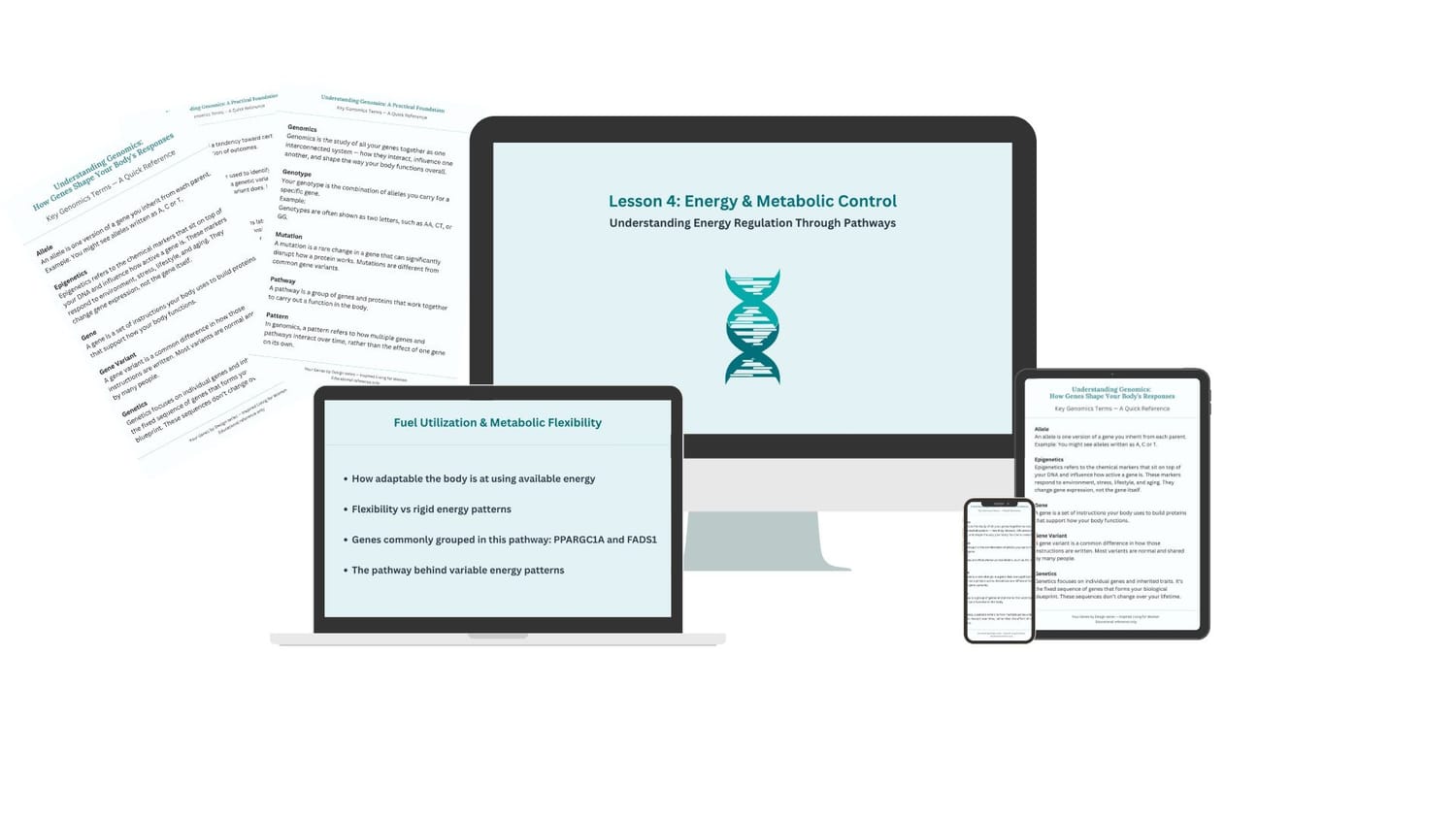
Here’s a look at a few of the lessons inside the course:
Lesson 1 — What Genomics Information Really Means
Learn how genomic information reflects patterns and tendencies throughout the body instead of predetermined outcomes.
Lesson 3 — Why One Gene Is Never the Whole Story
See how genes operate within pathways and systems. Learn why focusing on single genes misses the interactions that actually shape how your body functions.
Lesson 5 — Hormones, Detox & Clearance
Understand how hormone signaling, detoxification, methylation, and clearance work together.
Lesson 6 — Gut, Brain & System Communication
Explore how digestion, microbiome signaling, neurotransmitter processing, and brain energy interact across systems, influencing mood, focus, and cognitive endurance.
Bonus Lesson — When Individual Genes Matter — and Why
A clarifying lesson on how individual gene awareness fits within a systems-based framework, and why certain genes influence multiple pathways without acting as explanations on their own.
Full course curriculum included after enrollment.
What Changes When Genomics Finally Clicks
Before
You feel like genomics information is a collection of letters and gene names without a clear way to understand how they connect. Individual results are easy to focus on, but they don’t explain how your genes work together within the body.
After
You understand how genes work together within pathways and systems. You can recognize patterns across energy, hormones, detox, and communication — and see how context shapes real-life experience.
Still Have Questions?
No. This course is designed as a foundation. It starts with core concepts and builds gradually, focusing on how genetic information is structured and how genes function within systems. No background knowledge is required.
This course teaches how to think about genetic information, not how to interpret specific results. It provides context and structure so genomic information makes sense conceptually, rather than walking through individual reports or offering personalized analysis.
You’ll leave with a clearer way of thinking about genomics — an understanding of how genes function within systems and why context matters. The outcome is orientation and literacy, not answers or prescriptions.
No. The focus is understanding, not action steps, protocols, or recommendations. The goal is clarity — learning how genes relate to pathways, systems, and patterns so information feels coherent rather than fragmented.
The material is accurate but accessible. Concepts are explained in plain language, with an emphasis on understanding relationships and systems rather than memorizing technical details or terminology.
Yes — as long as you’re looking for a conceptual framework rather than clinical interpretation. Many educators and non-clinical practitioners find it useful for understanding how genomic information fits together without stepping into analysis or guidance.
The course is self-paced and designed to be completed in short lessons. You can move through it at your own speed and return to the material whenever you want.
You’ll have ongoing access to the course materials after enrollment.
Because this is a digital course with immediate access to all materials, refunds aren’t offered once enrollment is complete. Please read the course description carefully to make sure it’s the right fit before enrolling.
Ready to better understand how genes influence the systems functioning throughout your body?
This course helps you see how pathways connected to energy, hormones, detox, communication, and long-term resilience work together as a whole.
© 2026. All Rights Reserved
Home | Terms & Conditions